
More


Underfloor heating is often regarded as a low-maintenance heating solution. With pipework concealed beneath the floor and much of the installation hidden from view, there are fewer visible components for homeowners to think about compared with a traditional radiator system.
However, the fact that an underfloor heating system is largely out of sight doesn’t mean its water quality can be overlooked. Like any wet central heating installation, it relies on clean, appropriately treated water circulating effectively through the system.
For lower-temperature heating circuits, there is also an additional consideration. Under certain conditions, bacteria and other microorganisms can develop within the system water, potentially contributing to deposits, restricted circulation and performance problems that aren’t immediately apparent.
Understanding the conditions that can encourage microbiological contamination, and recognising the warning signs, is an important part of protecting underfloor heating systems over the long term.
Underfloor heating generally operates at lower flow temperatures than traditional radiator systems, often around 35–45°C, depending on the installation and its design.
These lower temperatures are one of the reasons underfloor heating works particularly well with air source heat pumps, allowing heat to be distributed effectively across a large floor area.
However, operating at lower temperatures can also create conditions that are more favourable to certain types of microbial growth. This is particularly relevant where water circulation is limited, sections of pipework experience low flow rates or the system remains unused for extended periods.
Long pipe runs and complex manifold arrangements can also make it more difficult to identify developing problems, particularly when contamination is confined to individual circuits.
This doesn’t mean every underfloor heating system will experience bacterial contamination. The risk depends on several factors, including system design, operating conditions, water quality and the treatment measures already in place.
Nevertheless, microbiological contamination is an important consideration when designing, commissioning and maintaining low-temperature heating systems.
Bacteria and other microorganisms can form biofilm, a layer of microbial material that attaches to internal surfaces such as pipework, manifolds and heat exchangers.
As biofilm develops, it can contribute to the accumulation of deposits and may interfere with circulation through parts of the heating system. Because much of an underfloor installation is concealed, these problems can be difficult to identify until performance begins to deteriorate.
There are several warning signs that may justify further investigation.
Unpleasant smells from the system water
An unusual or unpleasant smell when venting or draining the system can sometimes be associated with microbial activity. However, odours can have other causes, so they should be treated as a possible indicator rather than proof of contamination.
Cloudy, discoloured or slimy water
Water samples containing suspended material, unusual discolouration or a slimy appearance may suggest contamination within the heating circuit.
Further investigation may be needed to distinguish microbiological growth from corrosion products or other types of debris.
Uneven heating across underfloor circuits
If certain areas of the floor take longer to warm up or fail to reach the expected temperature, restricted circulation could be contributing to the problem.
Biofilm and other deposits may affect flow through individual circuits, although balancing issues, airlocks and other faults should also be considered.
Blocked or sticking manifold flow meters
Deposits accumulating within the system can interfere with manifold components, including flow meters. Where components repeatedly become restricted or difficult to operate, the condition of the system water is worth investigating.
Repeated gas accumulation
If gas continues to collect within the system after venting, it may indicate an underlying issue requiring further checks.
Microbial activity is one possible consideration, but corrosion and other system conditions can also contribute to gas formation.
None of these symptoms confirms microbiological contamination on its own. A proper assessment of the installation and its water quality is important before selecting a cleaning or treatment method.
Microbiological contamination can cause more than an unpleasant smell or discoloured water. Where biofilm and associated deposits accumulate, they may restrict circulation through pipework and components, potentially affecting heat distribution and overall system performance.
Some microorganisms can also contribute to corrosion through their activity within biofilms. This is known as microbiologically influenced corrosion (MIC) and is an additional consideration alongside the more familiar corrosion risks associated with oxygen and other water-quality conditions.
Conventional corrosion inhibitors and biocides perform different functions. While an inhibitor helps protect against corrosion and limescale, microbiological control may also be needed where system conditions create a risk of bacterial or fungal growth.
The consequences of contamination can be particularly inconvenient in underfloor heating installations because much of the pipework is buried beneath the floor. Investigating restrictions or restoring circulation may be more complicated than dealing with an accessible radiator circuit.
This makes appropriate water treatment, good commissioning practices and ongoing maintenance especially valuable.
Older underfloor heating installations may present additional risks
Some older underfloor heating systems contain plastic pipework without an effective oxygen barrier. Where oxygen can diffuse into the system water, it may increase the risk of corrosion affecting metal components elsewhere in the heating circuit.
Mixed installations, combining underfloor heating with traditional radiators, also need to be considered as complete systems. Where circuits are hydraulically connected, contamination can circulate beyond the underfloor pipework and potentially affect pumps, heat exchangers and other components.
For this reason, water-treatment decisions should take account of the wider installation rather than focusing only on the underfloor loops.
Sentinel’s Clean. Protect. Maintain. approach provides a practical framework for protecting underfloor heating systems, with the additional consideration of microbiological control where appropriate.
The objective is to ensure that the system starts with clean water, receives suitable protection and is maintained throughout its working life.
1. Clean the system before commissioning
Cleaning and flushing are important stages of preparing any wet heating system for operation. New installations may contain debris introduced during construction, while existing systems can accumulate corrosion products and other deposits over time.
Before commissioning, the system should be cleaned and flushed in accordance with the relevant equipment and chemical manufacturers’ instructions.
For existing underfloor heating systems showing signs of contamination, the cleaning approach should be selected according to the nature and extent of the problem.
Where microbiological contamination is suspected, it’s important to investigate the cause and follow an appropriate treatment procedure rather than simply adding chemicals without assessing the condition of the system.
2. Assess the need for microbiological protection
Lower-temperature heating circuits can provide conditions that favour bacterial and fungal growth, particularly where circulation is limited or water quality has not been adequately maintained.
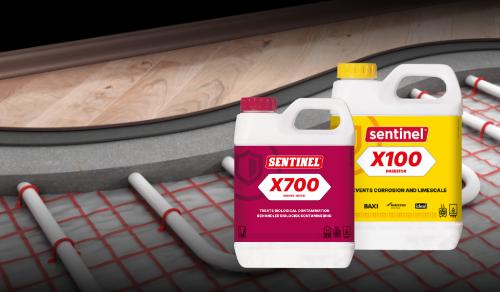
Where microbiological treatment is appropriate, Sentinel X700 Biocide is designed to help control bacterial and fungal contamination in suitable heating systems, including underfloor heating.
The need for biocide treatment should be assessed against the design and operating conditions of the installation, alongside relevant technical guidance.
As with any water-treatment chemical, the current product instructions should be followed to ensure the correct application, dosage and compatibility with other treatments used in the system.
3. Maintain appropriate corrosion protection
Microbiological control is only one aspect of protecting an underfloor heating installation. Corrosion and limescale remain important considerations, particularly where the system includes metal components such as pumps, manifolds and heat exchangers.
Sentinel X100 Inhibitor helps protect heating systems against corrosion and limescale, supporting the long-term condition of the system.
Where both inhibitor and biocide treatment are appropriate, they perform complementary functions. The inhibitor helps manage corrosion and scale risks, while the biocide helps control microbiological contamination.
The products used should be suitable for the installation and compatible with one another, with dosing carried out according to Sentinel’s current technical guidance.
4. Use suitable filtration
Filtration is another important part of maintaining water quality, helping to capture circulating debris before it reaches vulnerable components.
A correctly selected and installed filter can support the protection of pumps, heat exchangers and other equipment, particularly where an existing heating circuit is being connected to a new heat source.
For heat pump installations, Sentinel Eliminator Vortex700 is designed to capture magnetic and non-magnetic debris.
Filtration should be considered alongside cleaning and chemical treatment rather than as a replacement for either. Filters also need to be inspected and serviced in accordance with the manufacturer’s recommendations to maintain their effectiveness.
5. Test and maintain the system
Water treatment should be checked throughout the working life of an underfloor heating installation, not just when the system is first commissioned.
Regular water-quality checks can help identify changes in inhibitor concentration or signs of developing contamination. Recording the products used, treatment levels and test results also provides a useful maintenance history.
This information is particularly valuable when different engineers service the system over time, helping them understand what treatment is already present and whether further action may be needed.
BS 7593 provides guidance on the cleaning, treatment and maintenance of domestic wet central heating systems. Its principles are relevant to underfloor heating, where water quality plays an important role in maintaining reliable circulation and protecting system components.
For lower-temperature installations, the potential for microbiological contamination should also be considered when establishing an appropriate water-treatment strategy.
This is particularly relevant for specifiers and designers, who have an opportunity to address water quality before the system is installed.
A clear specification should establish the requirements for cleaning and flushing, corrosion and scale protection, filtration, water-quality testing and ongoing maintenance. Where the design or operating conditions indicate a risk of microbiological contamination, suitable control measures should also be considered.
By addressing these requirements at the design stage, specifiers can help ensure that the installation receives appropriate treatment from commissioning onwards, rather than leaving important decisions until problems develop.
Underfloor heating can provide comfortable, efficient heating, particularly when combined with a suitably designed low-temperature heat source. However, its long-term performance still depends on the condition of the water circulating through the system.
Because the pipework is largely concealed, problems such as biofilm, corrosion debris and restricted circulation may not be immediately obvious. Taking water quality seriously during commissioning and maintenance can help reduce the risk of these issues developing into more disruptive faults.
For installers, this means cleaning the system properly, applying suitable treatment and checking water quality during servicing. For specifiers, it means considering microbiological risks alongside corrosion protection and filtration when setting out the requirements for an installation.
A considered Clean. Protect. Maintain. approach can help keep underfloor heating systems performing as intended, while reducing the likelihood of avoidable maintenance problems later.
Underfloor heating can be susceptible to microbiological contamination because of its lower operating temperatures and other system conditions. Whether biocide treatment is appropriate should be assessed against the installation, its operating conditions and relevant guidance. Sentinel X700 is designed to help control microbiological contamination in suitable heating systems.
Biocides and inhibitors perform different functions within a heating system. Biocides help control microbiological contamination, while inhibitors help protect against corrosion and limescale. Where both are required, compatible products should be used in accordance with the manufacturer’s current dosing and application instructions.
Possible warning signs include unpleasant odours, cloudy or slimy water, uneven heating, restricted circulation and deposits affecting manifold components. These symptoms can have several causes, so further investigation may be necessary to establish whether microbiological contamination is present.
Corrosion inhibitors help protect heating systems against corrosion, but they shouldn’t be relied upon as the sole means of controlling microbial growth. Where microbiological contamination presents a risk, an appropriate treatment strategy should consider both corrosion protection and microbiological control.

